Classic Crochet Granny Square: Free Beginner Pattern
A stack of finished granny squares feels soft, squishy, and satisfyingly dense between your fingers, offering a classic aesthetic that fits into any home style. This design suits beginners who want to practice tension and consistent stitch height without counting every single hole in a chain. Creating these squares provides a sense of accomplishment because they grow quickly, turning a tangled heap of yarn scraps into a neat, uniform shape. You will master the basic double crochet cluster and chain loop technique, which forms the foundation for countless blankets, pillows, and bags. These small items make thoughtful, handmade gifts for friends or family members.
Why You’ll Love This Pattern
The Classic Crochet Granny Square is the quintessential building block for fiber artists. You will find that this pattern is exceptionally meditative due to its repetitive, rhythmic nature, making it the ideal project to work on while listening to music or watching a film. Because each square uses only a small amount of yarn, it is the perfect way to use up leftover bits from larger projects. Since the construction relies on clusters worked into chain spaces, you do not need to hunt for tiny stitches, which saves your eyes and your patience during long sessions. This pattern also serves as a portable project that fits easily into a small bag for crafting on the go.
I started these to clear out my scrap bin and ended up making an entire blanket. The instructions are very clear and the squares come together quickly once you get the hang of the rhythm.
— Sarah, hobbyist crocheter
Pattern Overview & Skill Level
- Skill Level: Beginner
- Approximate Time: 20-30 minutes per square
- Construction: Worked in joined rounds, starting from the center and expanding outward
- Finished Dimensions: Approximately 5 inches by 5 inches when using recommended materials
Materials & Supplies Needed
- Yarn: Worsted weight #4, acrylic or cotton blend, approximately 15-20 yards per square.
- Hook Size: 5.0 mm (H-8).
- Notions: Tapestry needle for weaving in ends, scissors, and optional locking stitch markers to track the start of rounds.
- Safe yarn substitutions: You may use DK weight yarn with a 4.0 mm hook for a smaller, denser square or bulky weight yarn with a 6.0 mm hook for a larger, quicker square. Adjusting weight will change the final dimensions and drape.
Stitch Guide & Abbreviations (US Terms)
- ch = chain
- st/sts = stitch/stitches
- sl st = slip stitch
- dc = double crochet
- dc cluster = 3 double crochet stitches worked into the same space
- sp = space
- MR = magic ring
Step-by-Step Pattern Instructions
Each round is joined with a slip stitch to the top of the beginning chain or the first stitch of the round. Chain 3 at the start of each round counts as a double crochet.
Granny Square Body
- Rnd 1: Make a MR. Ch 3, 2 dc in ring, ch 2, (3 dc in ring, ch 2) 3 times. Join with a sl st to top of beg ch-3. (12 dc, 4 ch-2 spaces)
- Rnd 2: Sl st into the next ch-2 space. Ch 3, 2 dc in same sp, ch 2, 3 dc in same sp (first corner). *Ch 1, skip 3 sts, (3 dc, ch 2, 3 dc) in next ch-2 corner sp. Repeat from * 2 more times. Ch 1, join with a sl st to top of beg ch-3. (24 dc, 4 ch-2 spaces, 4 ch-1 spaces)
- Rnd 3: Sl st into the next ch-2 corner sp. Ch 3, 2 dc in same sp, ch 2, 3 dc in same sp. *Ch 1, 3 dc in next ch-1 side sp, ch 1, (3 dc, ch 2, 3 dc) in next corner sp. Repeat from * 2 more times. Ch 1, 3 dc in next ch-1 side sp, ch 1, join with a sl st to top of beg ch-3. (36 dc, 4 ch-2 spaces, 8 ch-1 spaces)
- Rnd 4: Sl st into the next ch-2 corner sp. Ch 3, 2 dc in same sp, ch 2, 3 dc in same sp. *Ch 1, (3 dc in next ch-1 sp, ch 1) twice, (3 dc, ch 2, 3 dc) in next corner sp. Repeat from * 2 more times. Ch 1, (3 dc in next ch-1 sp, ch 1) twice, join with a sl st to top of beg ch-3. (48 dc, 4 ch-2 spaces, 12 ch-1 spaces)
Finishing
Fasten off yarn, leaving a 6-inch tail. Use your tapestry needle to weave the tail through the back loops of the stitches to secure it. Trim any excess yarn close to the fabric.
Care & Washing Instructions
- Hand wash in cool water using a gentle detergent specifically formulated for knit and crochet items.
- Lay the square flat on a clean towel and reshape it to ensure the corners are square while drying.
- Avoid using a tumble dryer, as heat can shrink acrylic or stretch natural fibers beyond their original shape.
Pro Tips & Common Mistakes to Avoid
- Maintain consistent tension by ensuring your yarn flow remains steady; if your squares pucker, try loosening your grip.
- Use a stitch marker at the beginning of your round so you can easily identify where to join, as the corners can sometimes look similar to side clusters.
- Weave your ends into the base of the clusters on the wrong side to keep the front of your work clean and professional.
- Adjusting the size is simple: add more rounds following the established pattern of (3 dc, ch 1) in side spaces and (3 dc, ch 2, 3 dc) in corners, which will increase your total yarn consumption for each additional round.
Frequently Asked Questions
Can I use a different yarn weight for this pattern?
Yes, you can use any yarn weight as long as you pair it with a hook size appropriate for that fiber to ensure the fabric remains stable and not too loose or stiff.
Is this pattern suitable for someone who has never held a crochet hook?
This pattern is a foundational exercise for beginners, focusing on the double crochet stitch and working into chain spaces rather than tight loops, which is very helpful for learning.
How do I join these squares together to make a blanket?
You can join them using a slip stitch seam through the back loops or by using a mattress stitch with a tapestry needle for a flatter, nearly invisible connection.
Am I allowed to sell items made from this pattern?
You are welcome to sell finished squares or blankets you have created yourself, though you should not distribute the written pattern text as your own work.
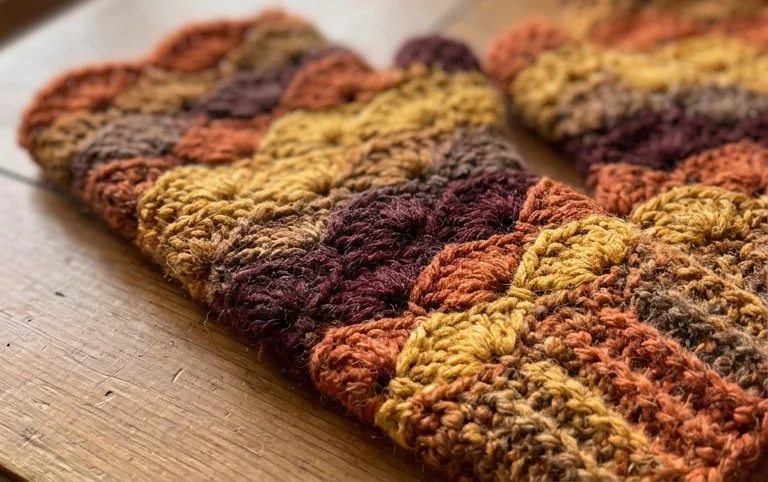
Your finished squares create a charming and cozy texture that holds its shape beautifully over time. You might swap the standard worsted weight yarn for a soft cotton or even a delicate wool blend to change the overall drape and weight of your blanket. Sharing your progress on Pinterest or tagging your photos on social media helps others find the inspiration they need for their next craft session. Be sure to check back on the blog for more free patterns to build your collection of handmade goods.